
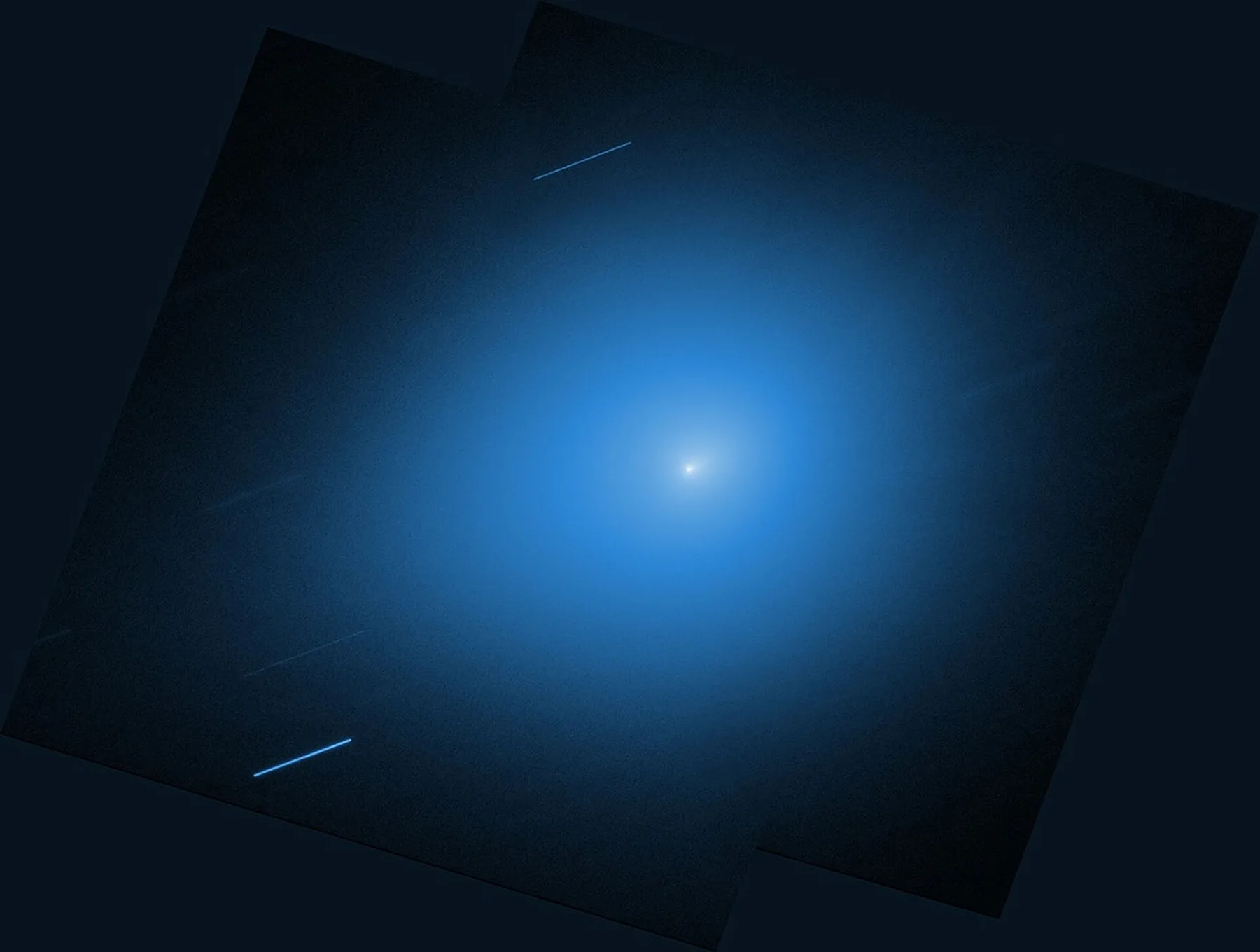
3I/ATLAS: The Third Interstellar Visitor
A comet from another star system, possibly older than the Sun — and the subject of a viral alien-probe rumor.
On 1 July 2025, the NASA-funded ATLAS survey telescope in Chile spotted a faint object moving too fast to be bound to the Sun. It was only the third interstellar object ever found, after 'Oumuamua in 2017 and comet Borisov in 2019, and was named 3I/ATLAS. It reached its closest point to the Sun around 29–30 October 2025, at about 1.4 astronomical units, and never came closer to Earth than about 1.8 AU.
More than a dozen NASA missions, along with ESA spacecraft and major ground observatories, observed it. The comet turned out to be chemically strange: very rich in carbon dioxide, with methane detected for the first time on an interstellar object and water carrying at least 30 times more deuterium than Solar System comets. Speculation that it might be alien technology spread widely, but radio searches found no artificial signals, and the scientific consensus is that it is a natural comet.
Case log
An open case. Dated developments, oldest first, each with its source.
ATLAS survey telescope in Chile reports the object; it is confirmed as the third interstellar object.
Sources: 1A preprint asks whether 3I/ATLAS could be alien technology, sparking viral coverage.
Sources: 11Closest approach to the Sun, about 1.4 AU.
Sources: 1Webb observes the outbound comet and detects methane.
Sources: 4ALMA result published: water deuterium at least 30× Solar System comets.
Sources: 6SETI Institute publishes its radio search: no technosignatures.
Sources: 8
Why it matters
It is a rare physical sample from another planetary system, and a live case study in how science handles a viral claim.
What the evidence says
- Established
3I/ATLAS was discovered on 1 July 2025 by the NASA-funded ATLAS survey telescope in Chile and is the third known interstellar object.
Basis: NASA mission page.
Sources: 1 - Established
It came closest to the Sun around 30 October 2025 at about 1.4 AU, and never came closer than about 1.8 AU to Earth.
Basis: NASA mission page.
- Established
Its coma is unusually rich in carbon dioxide compared with water.
Basis: JWST near-infrared spectroscopy (ApJ Letters, 2025).
Sources: 3 - Established
Webb detected methane on 3I/ATLAS, the first direct detection of methane on an interstellar visitor.
Basis: JWST/MIRI observations in December 2025 (ApJ Letters, 2026).
- Established
Its water is enriched in deuterium by at least 30 times relative to Solar System comets, pointing to formation in a very cold environment.
Basis: ALMA measurement (Nature Astronomy, 2026).
- Established
Radio searches found no technosignatures; the Allen Telescope Array ruled out transmitters stronger than about 10–110 watts.
Basis: SETI Institute (Astronomical Journal, 2026); Breakthrough Listen.
- Speculative
3I/ATLAS could be alien technology.
Basis: Proposed in a July 2025 preprint citing 'anomalous' properties.
Counterpoint: Not peer reviewed; radio searches and its comet-like chemistry contradict it.
Sources: 11
Competing interpretations
Natural comet from an ancient, cold system
A comet ejected from the outer reaches of another star system, possibly billions of years old.
Artificial object
A probe or spacecraft built by another civilization.
Weigh the evidence
Having read the claims and sources, which explanation do you find most convincing?
One vote per browser. Results appear after you vote.
Open questions
- What kind of star system did it form in, and how long ago?
- How large is its nucleus?
- What will the archived data from more than a dozen missions still reveal?
Connected dossiers
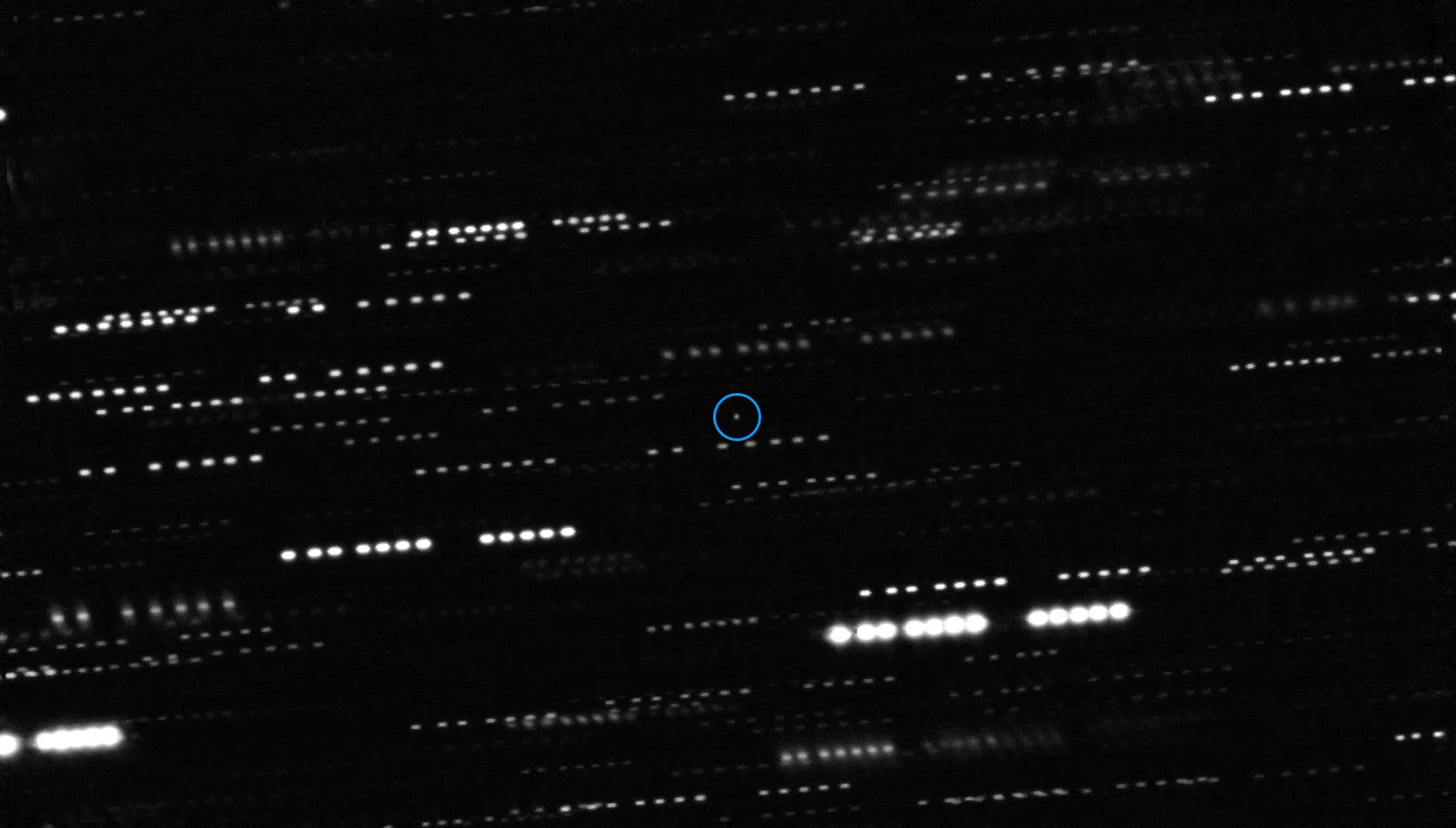 ʻOumuamua: The First Interstellar ObjectComparable case · The first and third interstellar visitors.
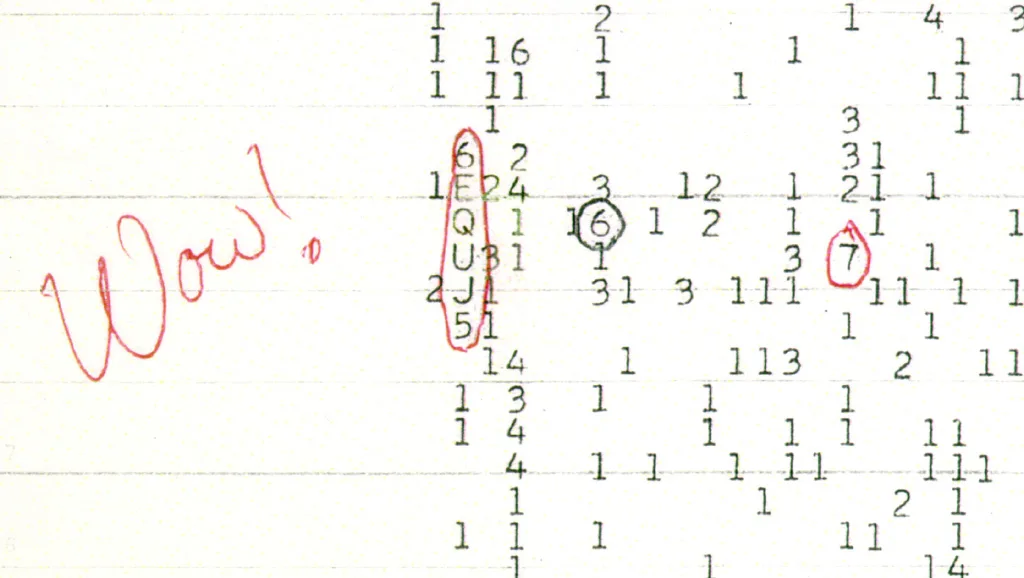 The Wow! SignalSame open question · A viral 'alien' claim tested by radio searches.
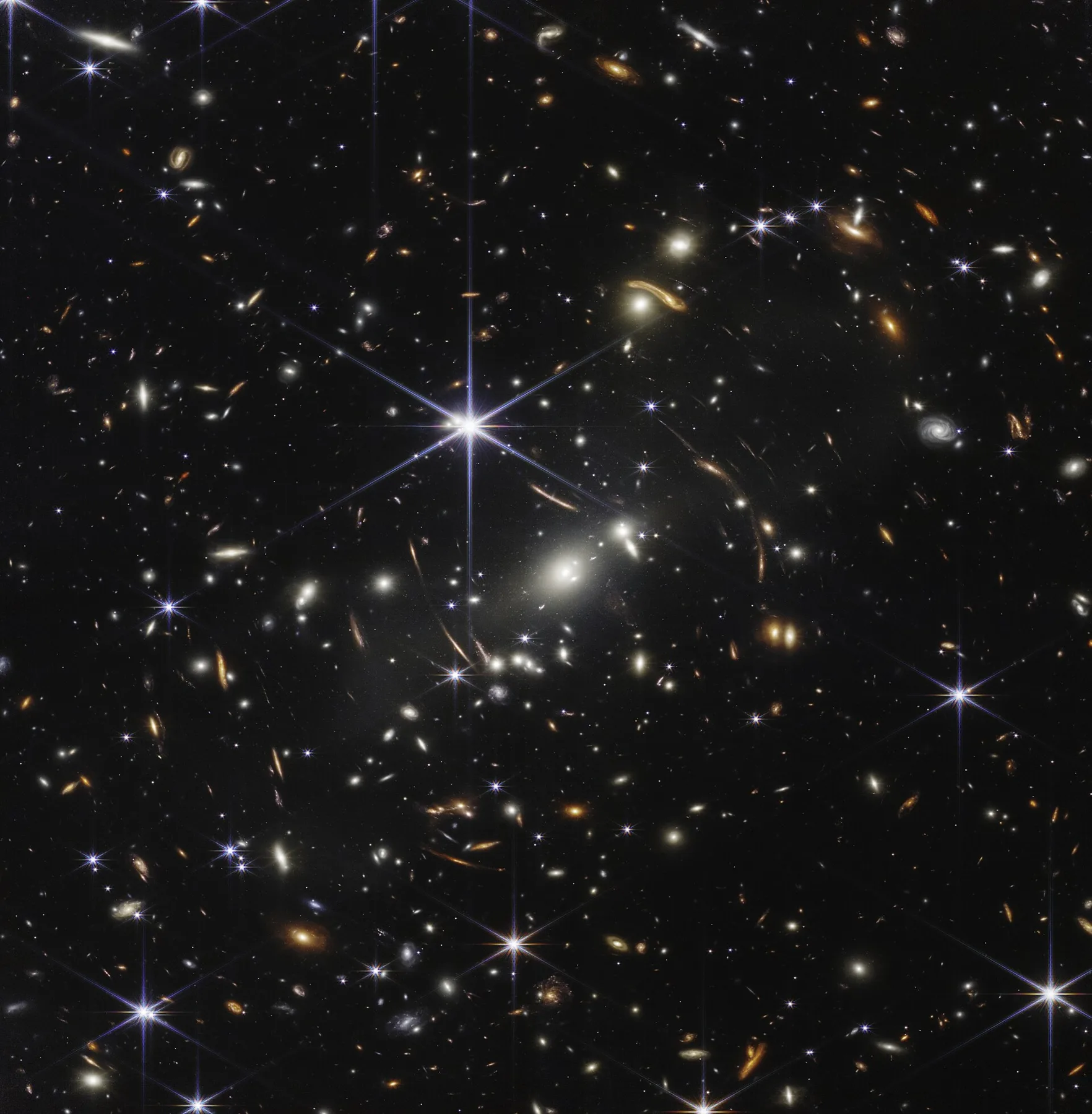 Webb's First Deep FieldInfluence · Webb measured its unusual chemistry.
See 3I/ATLAS in the discovery universe →
Ask the archive
Have a question about this dossier, or think a claim needs a better source? Send it to the editors.
Sources
- “Comet 3I/ATLAS.” NASA Science (2025) Open source ↗INSTITUTION · CHECKED 2026-10-22 · HTTP 200 LINK CHECK
- “IAU combats misinformation on interstellar object Comet 3I/ATLAS.” International Astronomical Union (2026) Open source ↗INSTITUTION · CHECKED 2026-10-22 · HTTP 200 LINK CHECK
- Cordiner, Roth, Kelley et al.. “JWST Detection of a Carbon-dioxide-dominated Gas Coma Surrounding Interstellar Object 3I/ATLAS.” The Astrophysical Journal Letters (2025) DOI 10.3847/2041-8213/ae0647PEER-REVIEWED · CHECKED 2026-10-22 · CROSSREF DOI METADATA
- “NASA's Webb Detects Methane on Interstellar Comet 3I/ATLAS.” NASA Science (2026) Open source ↗INSTITUTION · CHECKED 2026-10-22 · HTTP 200 LINK CHECK
- Belyakov, Wong, Bolin et al.. “The Volatile Inventory of 3I/ATLAS as Seen with JWST/MIRI.” The Astrophysical Journal Letters (2026) DOI 10.3847/2041-8213/ae5700PEER-REVIEWED · CHECKED 2026-10-22 · CROSSREF DOI METADATA
- “ALMA reveals interstellar comet 3I/ATLAS formed in a far colder world than our own.” ALMA Observatory (2026) Open source ↗INSTITUTION · CHECKED 2026-10-22 · HTTP 200 LINK CHECK
- Salazar Manzano, Paneque-Carreño, Cordiner et al.. “Water D/H in 3I/ATLAS as a probe of formation conditions in another planetary system.” Nature Astronomy (2026) DOI 10.1038/s41550-026-02850-5PEER-REVIEWED · CHECKED 2026-10-22 · CROSSREF DOI METADATA
- “SETI Institute looks for signs of technology in interstellar visitor 3I/ATLAS.” SETI Institute (2026) Open source ↗INSTITUTION · CHECKED 2026-10-22 · HTTP 200 LINK CHECK
- “Breakthrough Listen observations of interstellar object 3I/ATLAS.” SETI Institute / Breakthrough Listen (2026) Open source ↗INSTITUTION · CHECKED 2026-10-22 · HTTP 200 LINK CHECK
- Sheikh, Garcia Lopez, Gerrard et al.. “A Search for Radio Technosignatures from Interstellar Object 3I/ATLAS with the Allen Telescope Array.” The Astronomical Journal (2026) DOI 10.3847/1538-3881/ae6651PEER-REVIEWED · CHECKED 2026-10-22 · CROSSREF DOI METADATA
- Hibberd, Adam; Crowl, Adam; Loeb, Abraham. “Is the Interstellar Object 3I/ATLAS Alien Technology?.” arXiv preprint 2403.00040 (2025) Open source ↗REFERENCE WORK · CHECKED 2026-10-22 · HTTP 200 LINK CHECK
How to read the labels
Hero image: Hubble image of 3I/ATLAS, 30 November 2025. Image: NASA, ESA, STScI, D. Jewitt (UCLA), M.-T. Hui; processing J. DePasquale (STScI) · Public domain · via Wikimedia Commons. Evidence labels describe the written claims, not the image. Version 1 · updated 2026-10-22.