
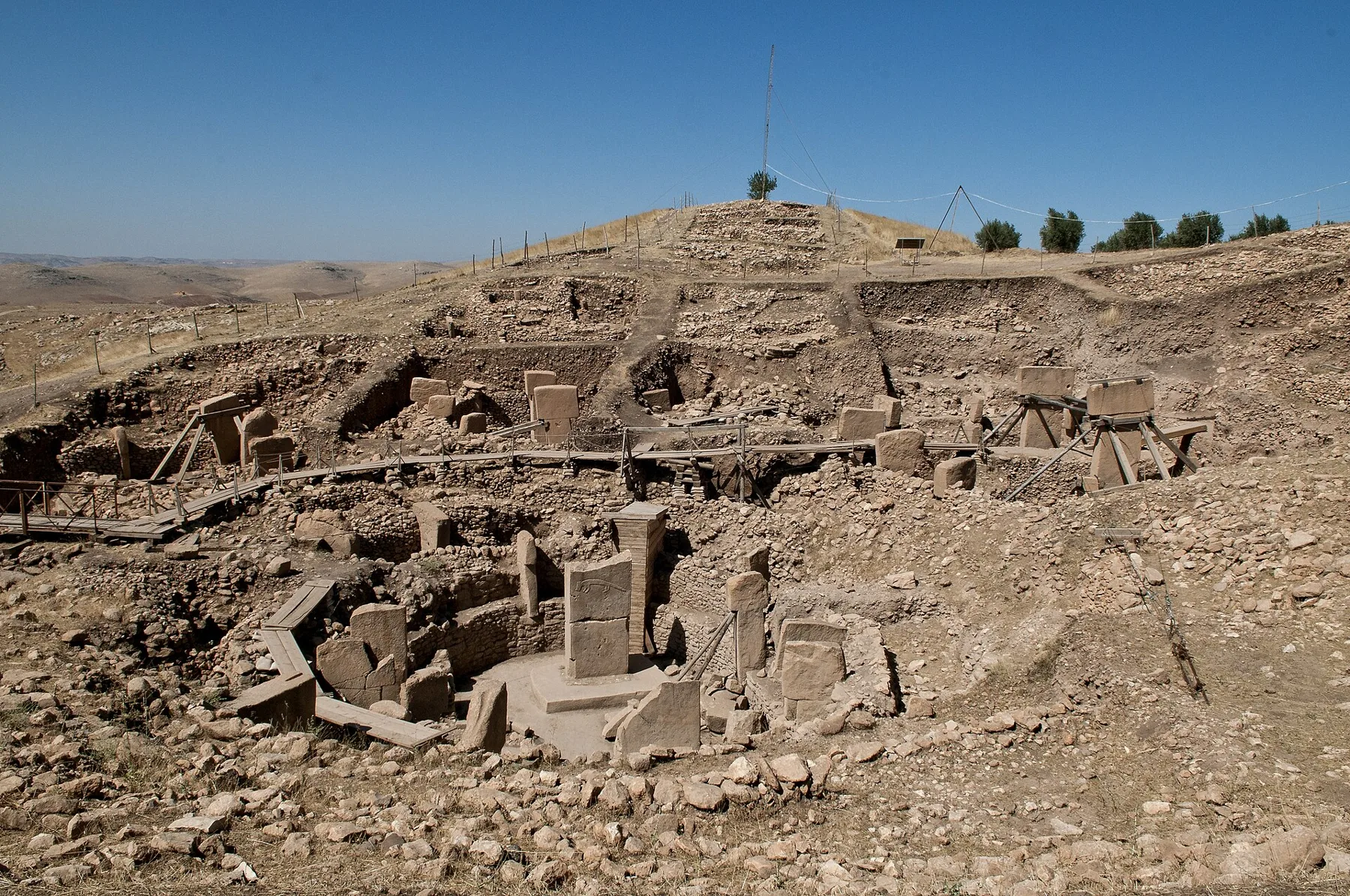
Göbekli Tepe
Monumental carved pillars raised before farming had fully taken hold.
On a limestone ridge in southeastern Türkiye, excavators uncovered circular enclosures ringed by T-shaped stone pillars, some over five meters tall and carved with foxes, boars, snakes and vultures. They were built in the Pre-Pottery Neolithic, thousands of years before writing, metal tools or the wheel.
Its discoverer, Klaus Schmidt, interpreted it as a sanctuary built by mobile hunter-gatherers — the 'world's first temple.' Newer excavations have found houses, cisterns and evidence of large-scale cereal processing, pointing to a settled community. Only a small fraction of the site has been excavated.
Why it matters
It challenged the idea that monumental architecture only came after farming and cities, and it shows how quickly an interpretation can change as excavation continues.
What the evidence says
- Established
Göbekli Tepe was built and occupied during the earliest part of the Southwest Asian Neolithic, the Pre-Pottery Neolithic.
Basis: Radiocarbon dating and stratigraphy from decades of excavation.
Sources: 1 - Established
UNESCO inscribed Göbekli Tepe as a World Heritage Site in 2018, describing it as one of the first manifestations of human-made monumental architecture.
Basis: UNESCO inscription record.
Sources: 2 - Contested
The early interpretation of the site as a sanctuary used by nomads with few permanent residents has given way to evidence of a settled community.
Basis: Recent excavations found domestic buildings and water-management features.
Counterpoint: Some researchers still emphasize the ritual character of the large enclosures.
- Established
Fragments of human skulls carved with deliberate grooves suggest a previously unknown form of Neolithic skull cult.
Basis: Osteological study published in Science Advances (2017).
Sources: 1 - Established
Its architecture and imagery resemble other nearby sites of the same period, such as Karahan Tepe.
Basis: Regional survey of the Taş Tepeler sites.
Sources: 5 - Established
As of 2021, only around 10% of the site had been excavated.
Basis: Reported by the excavation team.
Sources: 6
Competing interpretations
First temple
A ceremonial center built by hunter-gatherers.
Settlement with ritual buildings
A permanent village with houses, cisterns and special communal buildings.
Weigh the evidence
Having read the claims and sources, which explanation do you find most convincing?
One vote per browser. Results appear after you vote.
Open questions
- What were the enclosures used for?
- Were they deliberately buried, or did they fill in over time?
Connected dossiers
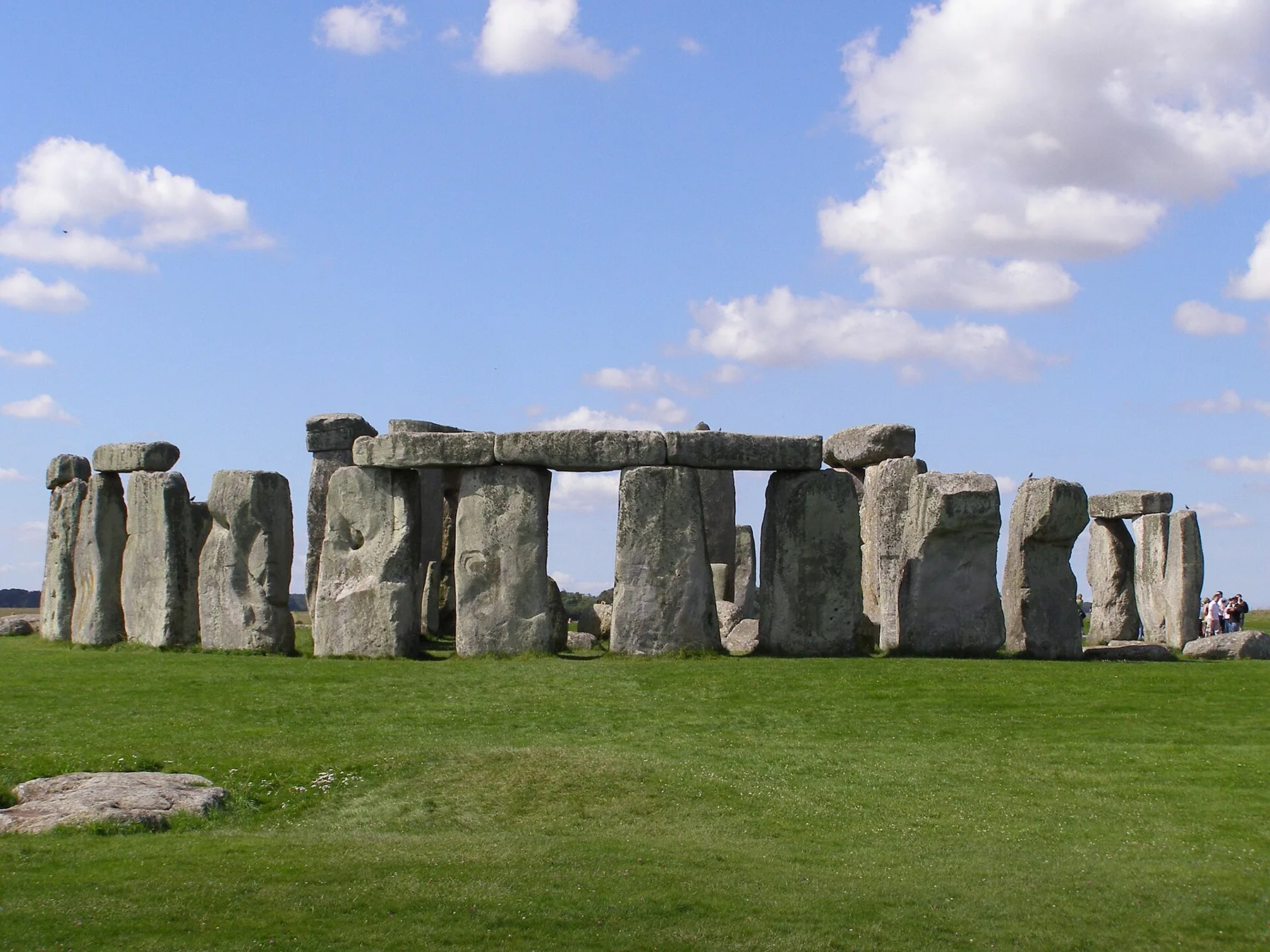 StonehengeComparable case · Monumental stone architecture whose purpose is debated.
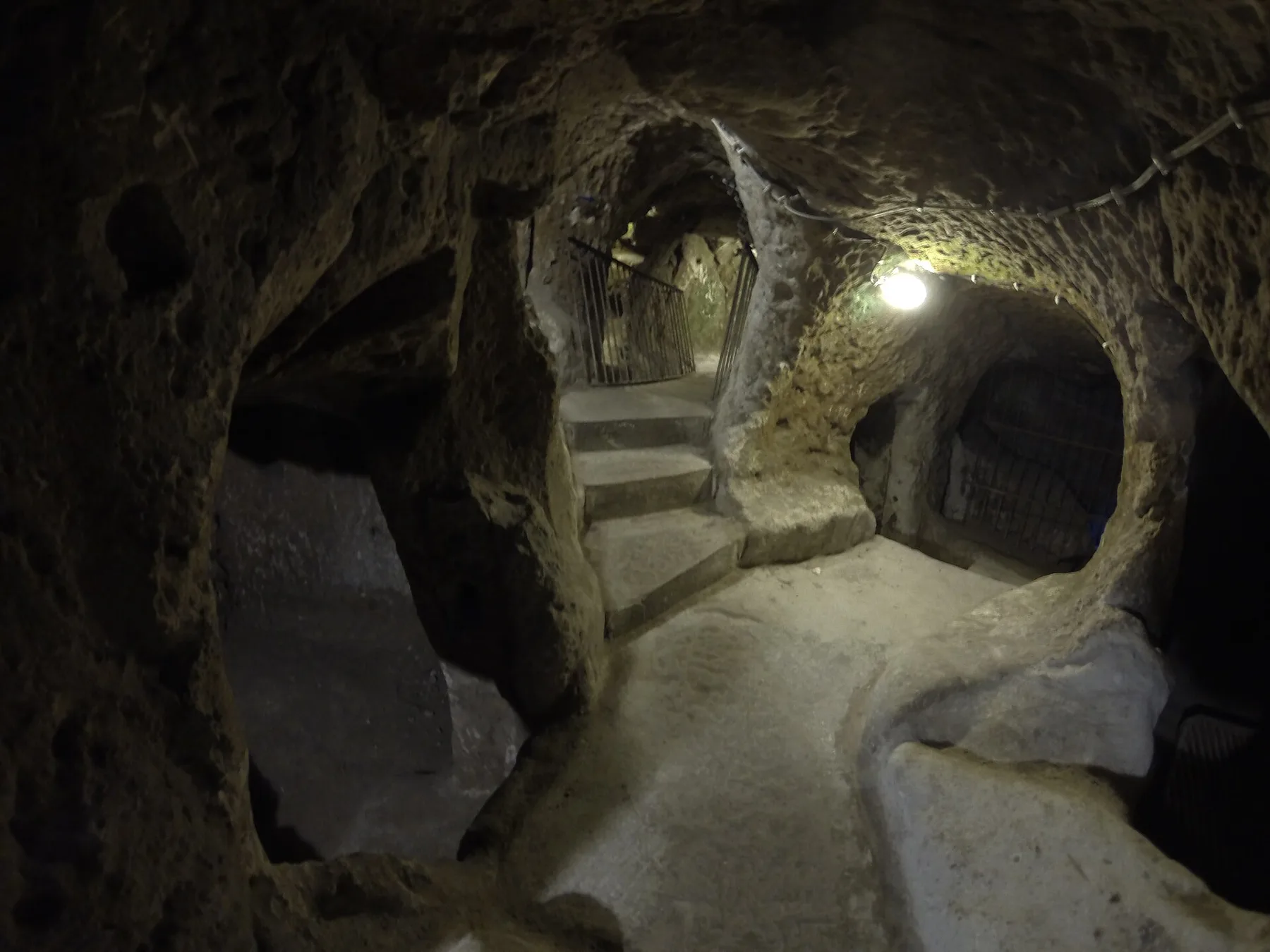 The Underground City of DerinkuyuSame region · Both in Anatolia.
See Göbekli Tepe in the discovery universe →
Ask the archive
Have a question about this dossier, or think a claim needs a better source? Send it to the editors.
Sources
- Gresky, Haelm, Clare. “Modified human crania from Göbekli Tepe provide evidence for a new form of Neolithic skull cult.” Science Advances (2017) DOI 10.1126/sciadv.1700564PEER-REVIEWED · CHECKED 2026-10-22 · CROSSREF DOI METADATA
- “Göbekli Tepe.” UNESCO World Heritage Centre Open source ↗INSTITUTION · CHECKED 2026-10-22 · HTTP 200 LINK CHECK
- Clare, Lee. “Göbekli Tepe, Turkey. A brief summary of research at a new World Heritage Site (2015–2019).” E-Forschungsberichte (2020) DOI 10.34780/efb.v0i2.1012PEER-REVIEWED · CHECKED 2026-10-22 · DOI REGISTERED AT DOI.ORG
- Banning. “So Fair a House.” Current Anthropology (2011) DOI 10.1086/661207PEER-REVIEWED · CHECKED 2026-10-22 · CROSSREF DOI METADATA
- Caletti. “Göbekli Tepe and the Sites around the Urfa Plain (SE Turkey): Recent Discoveries and New Interpretations.” Asia Anteriore Antica. Journal of Ancient Near Eastern Cultures (2020) DOI 10.13128/ASIANA-679PEER-REVIEWED · CHECKED 2026-10-22 · CROSSREF DOI METADATA
- Curry, Andrew. “Last Stand of the Hunter-Gatherers?.” Archaeology (2021) Open source ↗JOURNALISM · CHECKED 2026-10-22 · HTTP 200 LINK CHECK
- Curry, Andrew. “Göbekli Tepe: The World's First Temple?.” Smithsonian (2008) Open source ↗JOURNALISM · CHECKED 2026-10-22 · HTTP 200 LINK CHECK
How to read the labels
Hero image: Excavated stone enclosures at Göbekli Tepe, Şanlıurfa. Photo: Teomancimit · CC BY-SA 3.0 · via Wikimedia Commons. Evidence labels describe the written claims, not the image. Version 1 · updated 2026-10-22.