
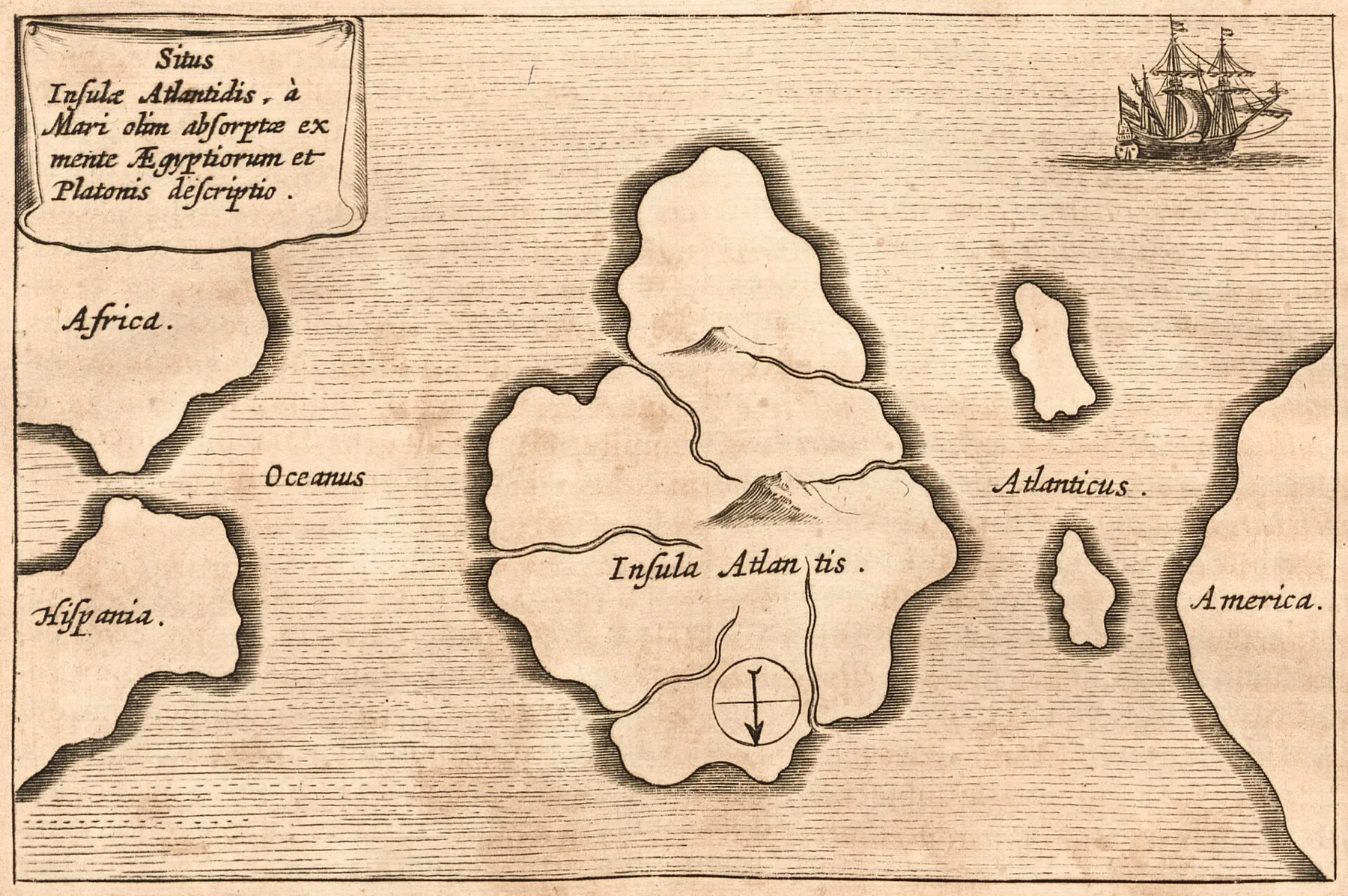
Atlantis: Legend and Legacy
The most famous lost civilization began as a story in a philosophy book.
Everything we know about Atlantis comes from two dialogues by Plato, the Timaeus and the Critias, written around 360 BCE. In them, a powerful island empire beyond the Pillars of Hercules attacks the Mediterranean world, is defeated by an idealized ancient Athens, and sinks into the sea in a single day and night.
Loading the full dossier…
Connected dossiers
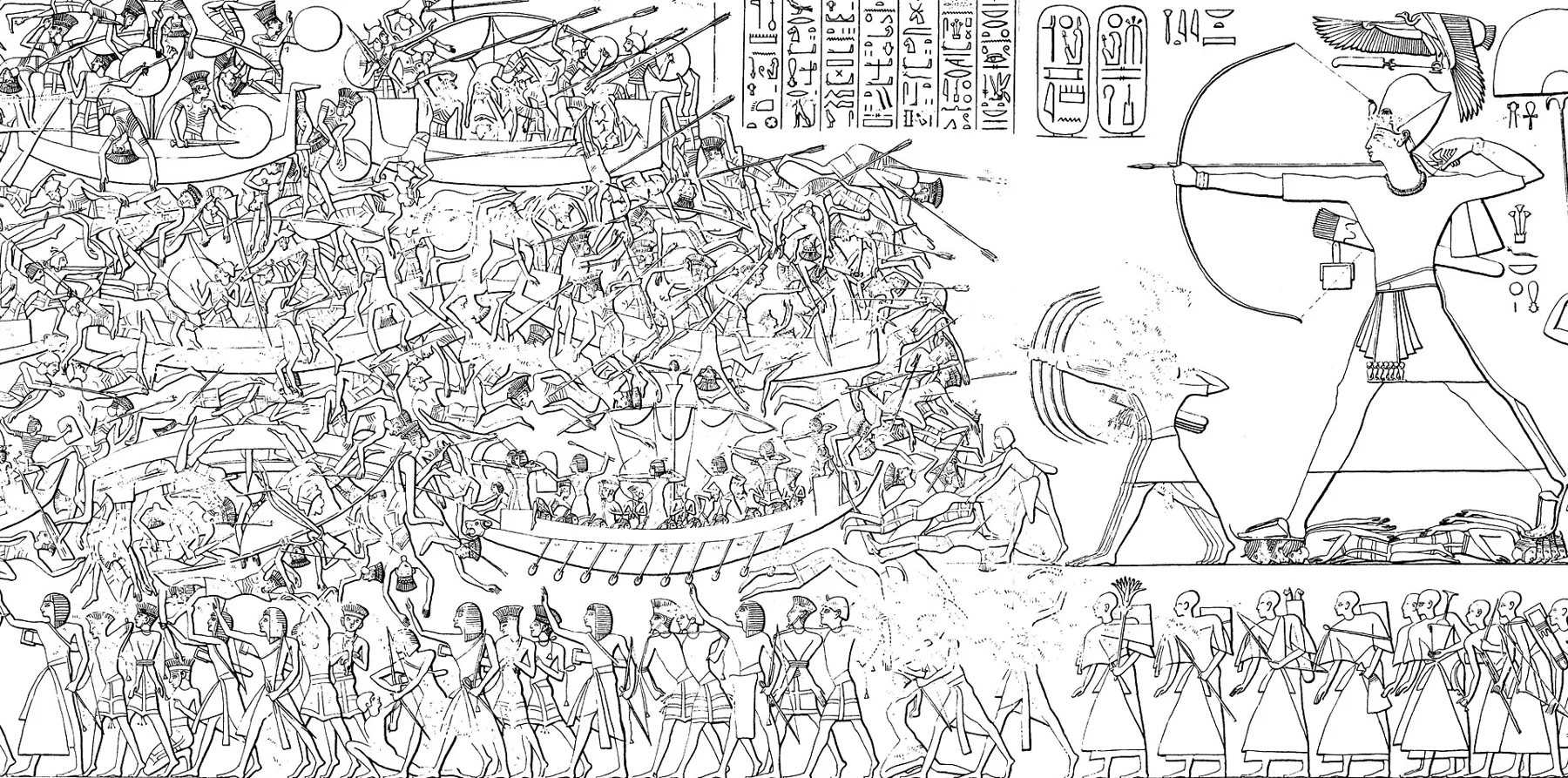 The Late Bronze Age CollapseSame open question · Proposed historical backdrop for the legend.
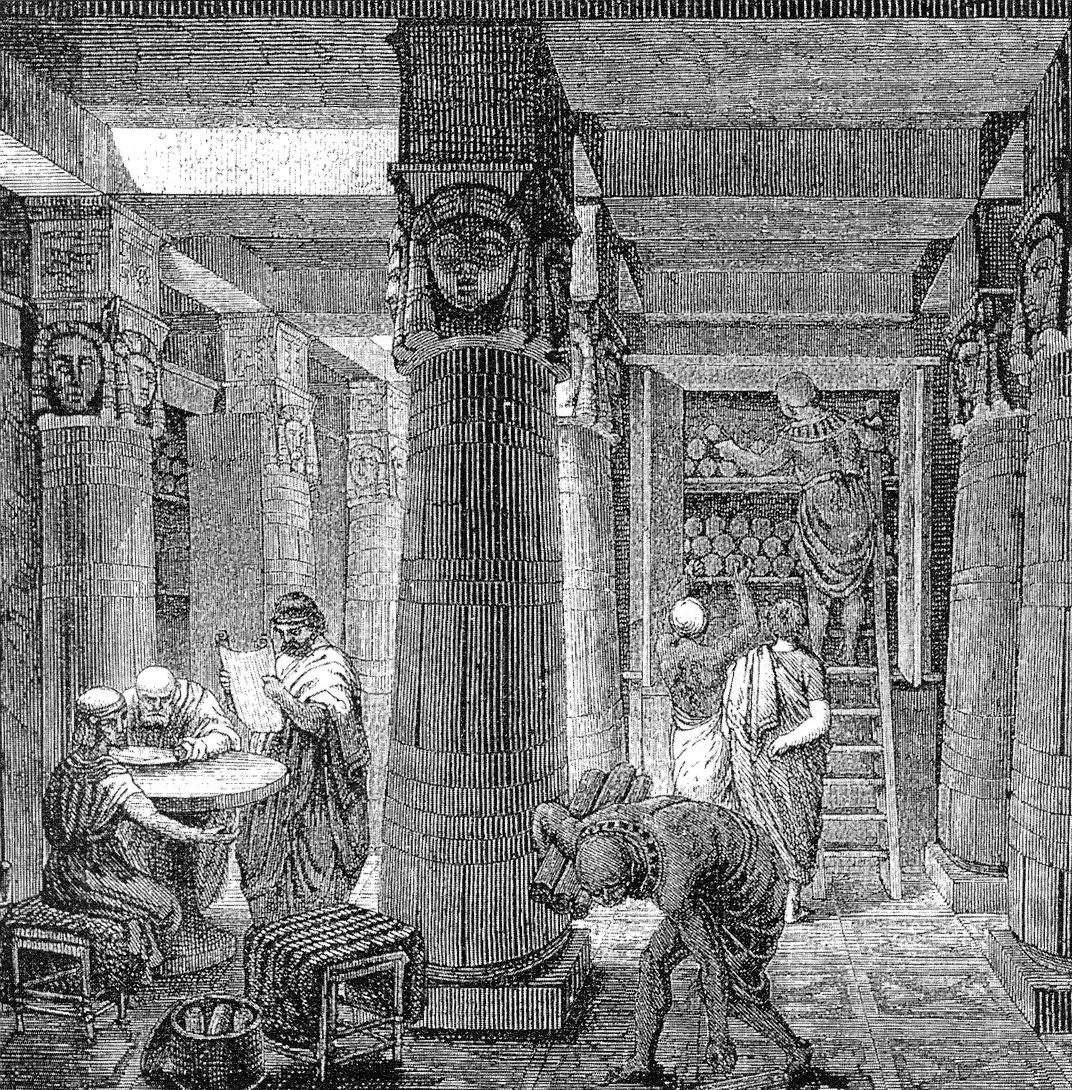 The Library of AlexandriaSame open question · Another story where popular myth outruns the sources.
See Atlantis in the discovery universe →
Ask the archive
Have a question about this dossier, or think a claim needs a better source? Send it to the editors.
How to read the labels
Hero image: Athanasius Kircher's 1678 map of Atlantis from Mundus Subterraneus (south at top). Image: Athanasius Kircher · Public domain · via Wikimedia Commons. Evidence labels describe the written claims, not the image. Version 1 · updated 2026-10-22.